Edd Hopkinson
Senior Designer
Solving design alignment at scale
Creating a shared visual language to improve consistency, quality, and scalability across Vodafone’s digital experiences.
Research
Strategy
Direction
Design System
Design
Guidance
Completed @ Vodafone
The Problem
Vodafone UK lacked a cohesive digital design language focused on experience quality and brand expression. The existing design system covered components but gave little guidance on overall structure, layout, typography, and how the brand should feel.
This led teams to take inspiration from other markets or implement the design system in their own ways, resulting in inconsistent user experiences, making it harder for UK users to move between services, and harder for teams to reuse work.
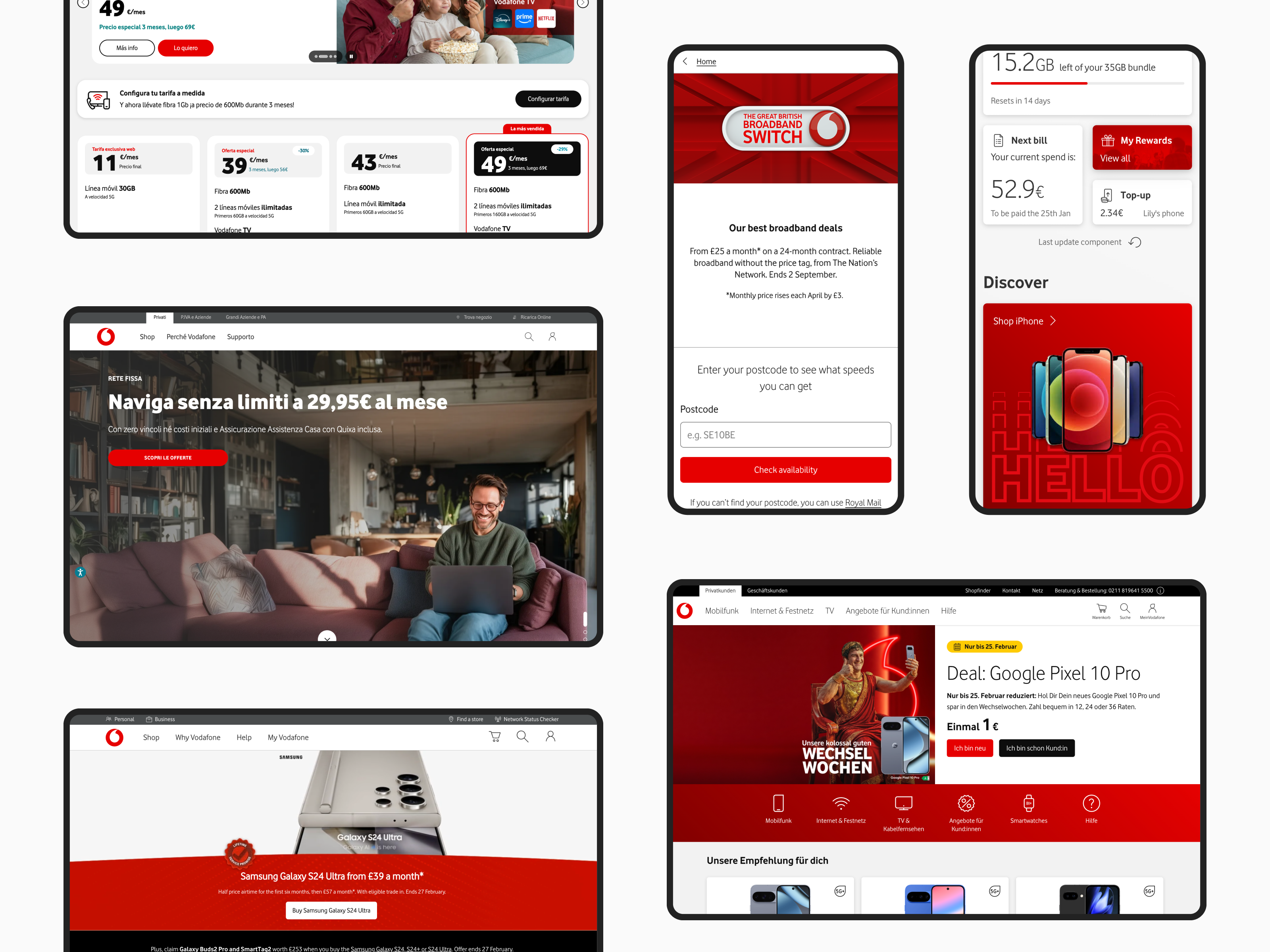
Different teams interpreted the design system differently, creating inconsistent brand and customer experiences.
“We’ve got components but no idea of how to use them all together to make a set of coherant websites ”
M Smith
Design Systems Lead @ Vodafone
My Role
I worked with design leaders from across the business to define Vodafone’s digital design language.
I focussed on:
- understanding the problem
- alignment to business goals
- shaping core design principles
- creating practical guidance for teams
- crafting reference designs
- validating the design language
- driving adoption across teams
This wasn’t about creating a pre-determined way to design. It was about creating a shared way of thinking about design and helping teams make better, more consistent design decisions.
“Working with Edd at Vodafone has been exceptional. His design expertise truly shines in how he masterfully unified our brand elements into a comprehensive digital branding guide. By seamlessly integrating our reference designs, brand guidelines, and design system into one cohesive resource, Edd created an invaluable tool for our team.”
M Smith
Design Systems Lead @ Vodafone
Research & Insight
I undertook an extensive audit of existing documentation to understand where inconsistencies and gaps existed.
The audit revealed:
- no practical links to business objectives
- lack of shared design principles
- lack of digital specific guidelines
- no guidance for design decisions
- reference designs from other markets
- inconsistent brand integration
- misaligned design system use
- knowledge gaps between teams
- duplication of work leading to inconsistency
This highlighted the need for a single source of truth for design decisions.
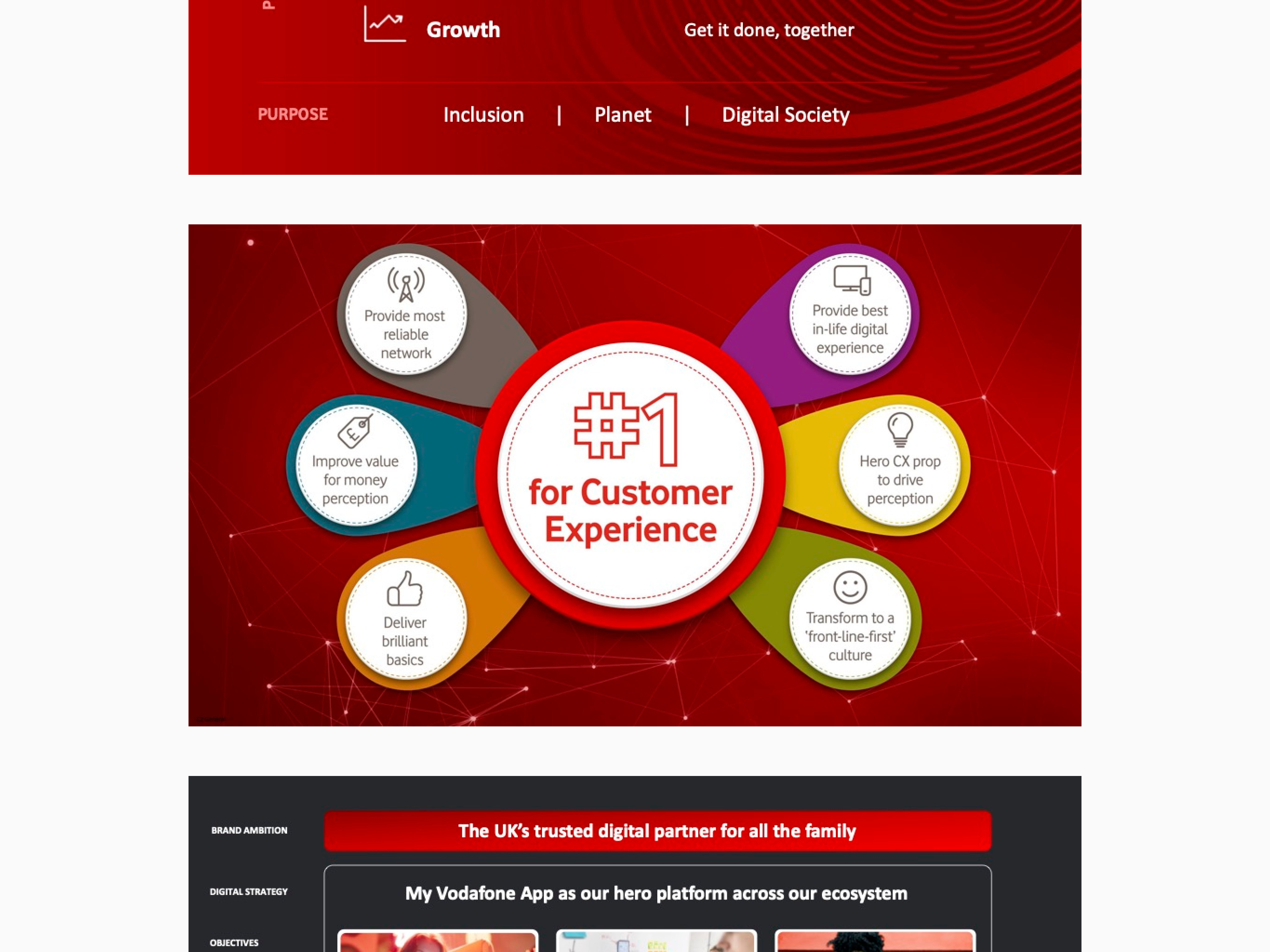
Layers of brand positioning, strategy, and business goals with no tangible ways for design teams to action them.
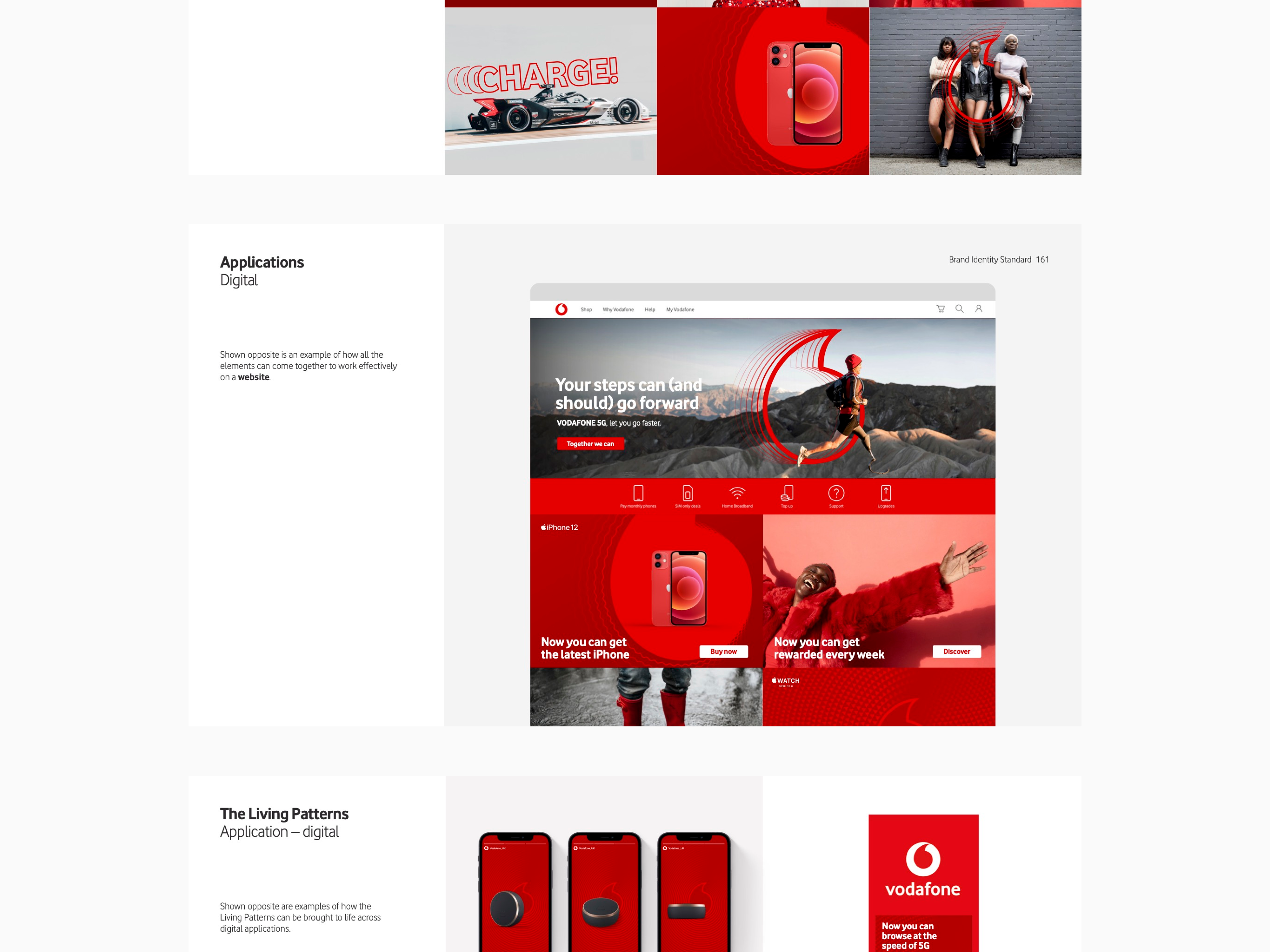
Teams looked to the brand guidelines which had poor digital guidance, leading them to fill in the gaps themselves.
The Solution
The design language was structured around a simple progression:
- Business goals
- Design principles
- Practical guidance
- Reference designs
Each layer making the previous actionable.
Aligning design to business goals
I created a framework that mapped digital targets and employee goals to business objectives and brand ambitions, giving the design language a clear strategic purpose.
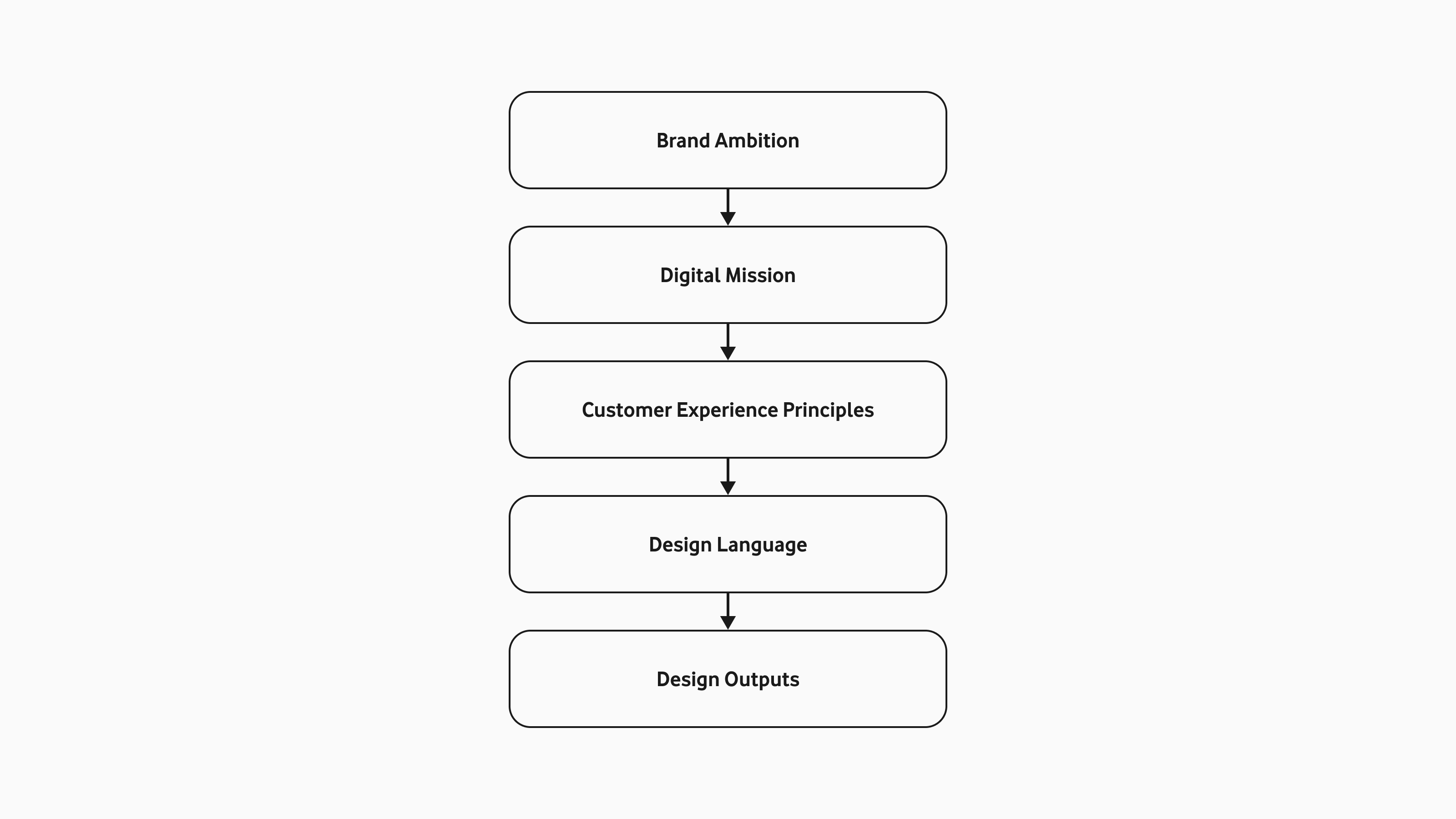
Connecting design outcomes to Vodafone’s business objectives and brand ambitions.
Creating principles to support those objectives
From this, I introduced broad design principles that showed how design could directly contribute to business goals. For example, UI principles around clear structure, reducing clutter, and usability supported the wider customer experience goal of being straightforward.
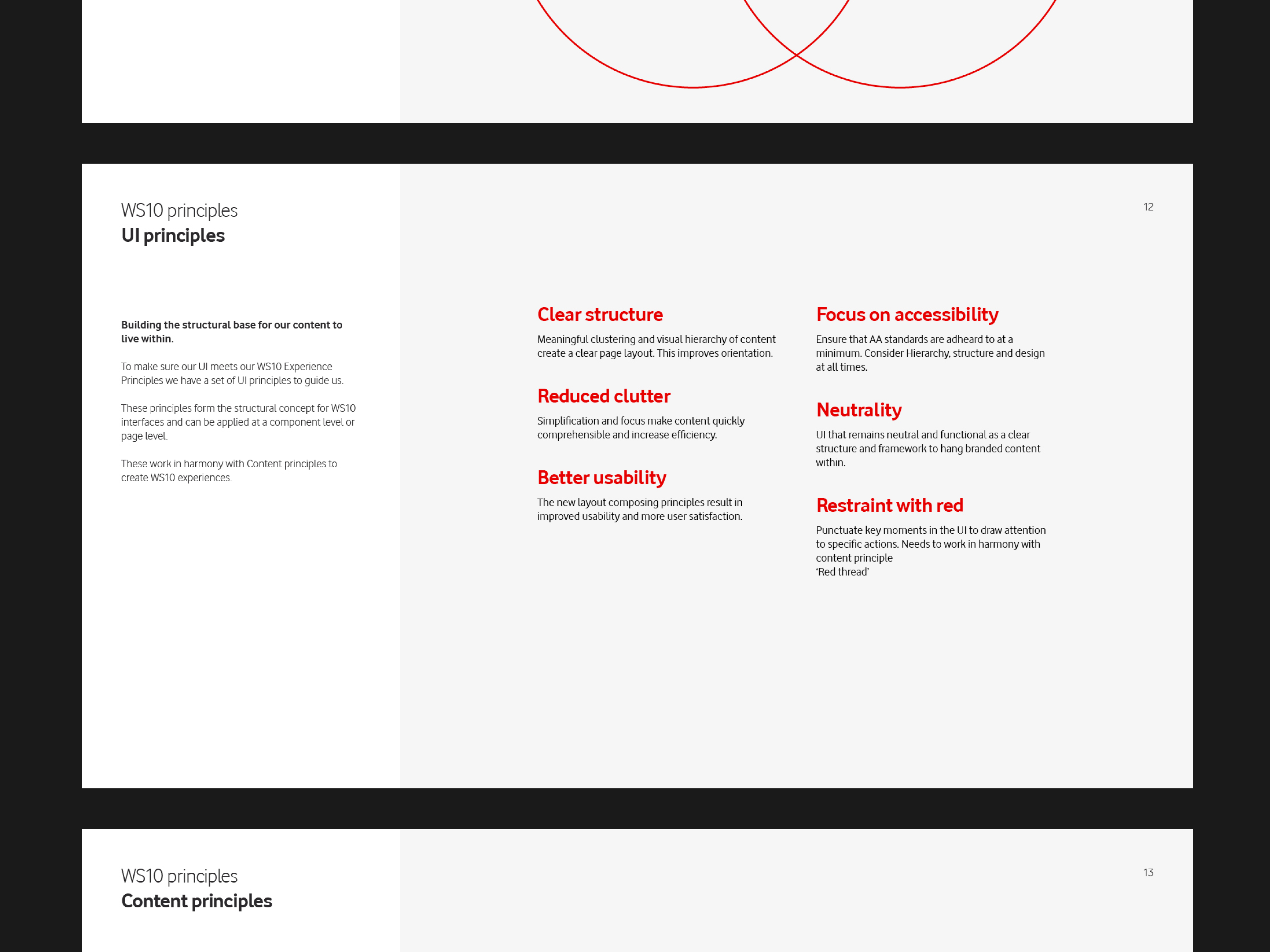
Core design principles guide teams in delivering better customer experiences.
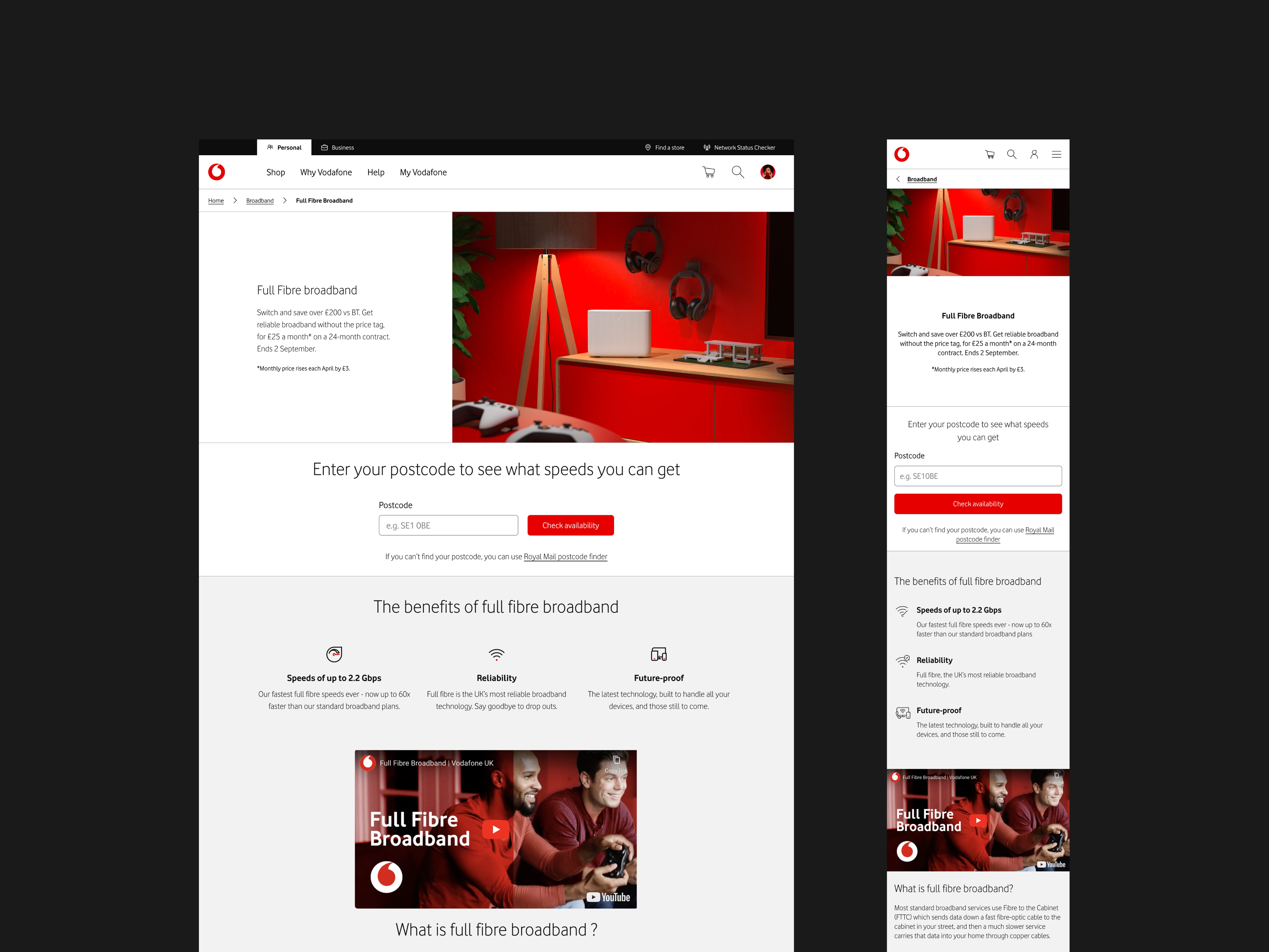
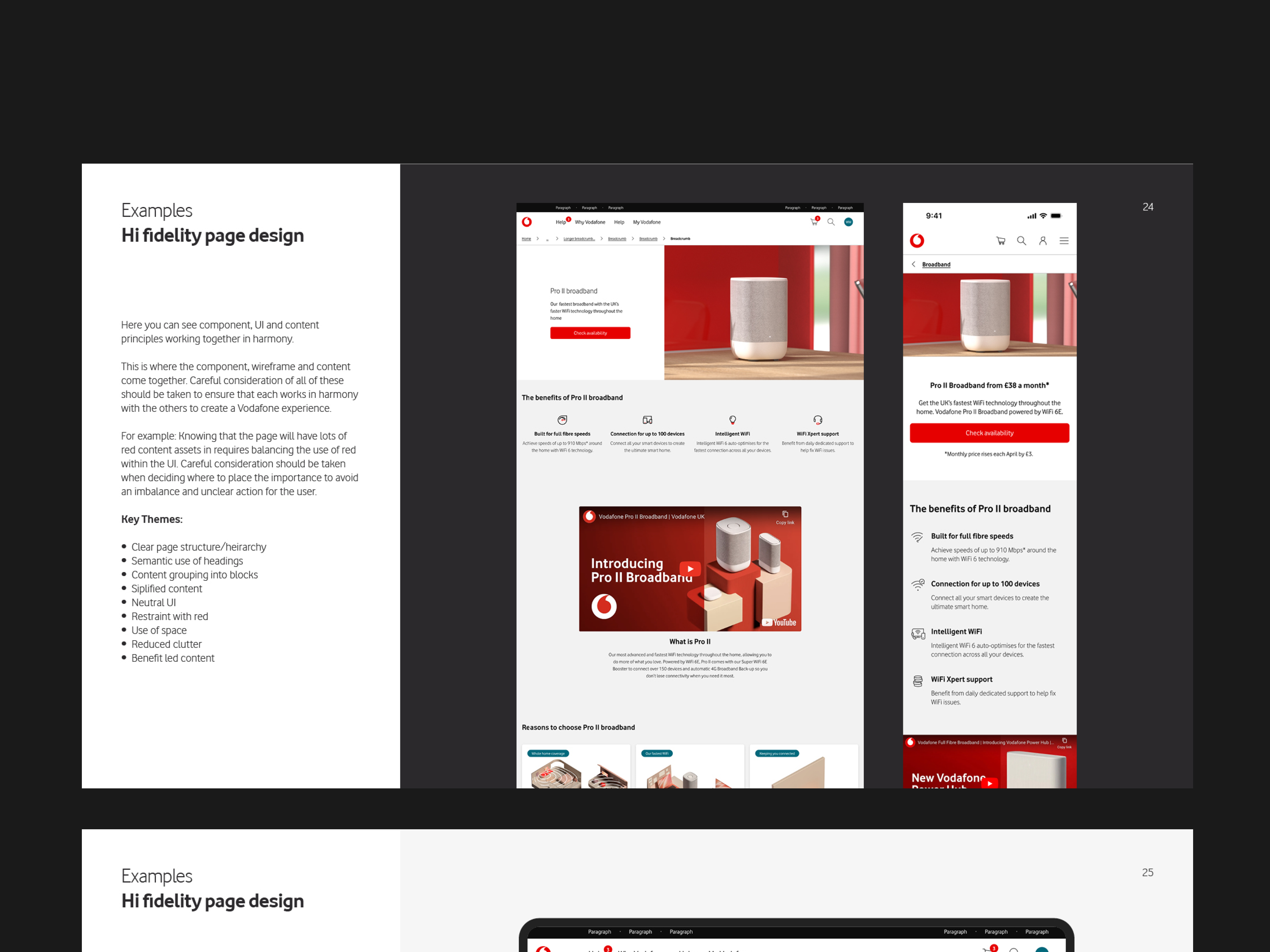
Applying the UI principles in a broadband page redesign.
Guidance to help teams apply the principles
I then visualised the principles, creating practical guidance that designers could apply to real project work, giving a consistent foundation for making design decisions and a way to translate principles into action.
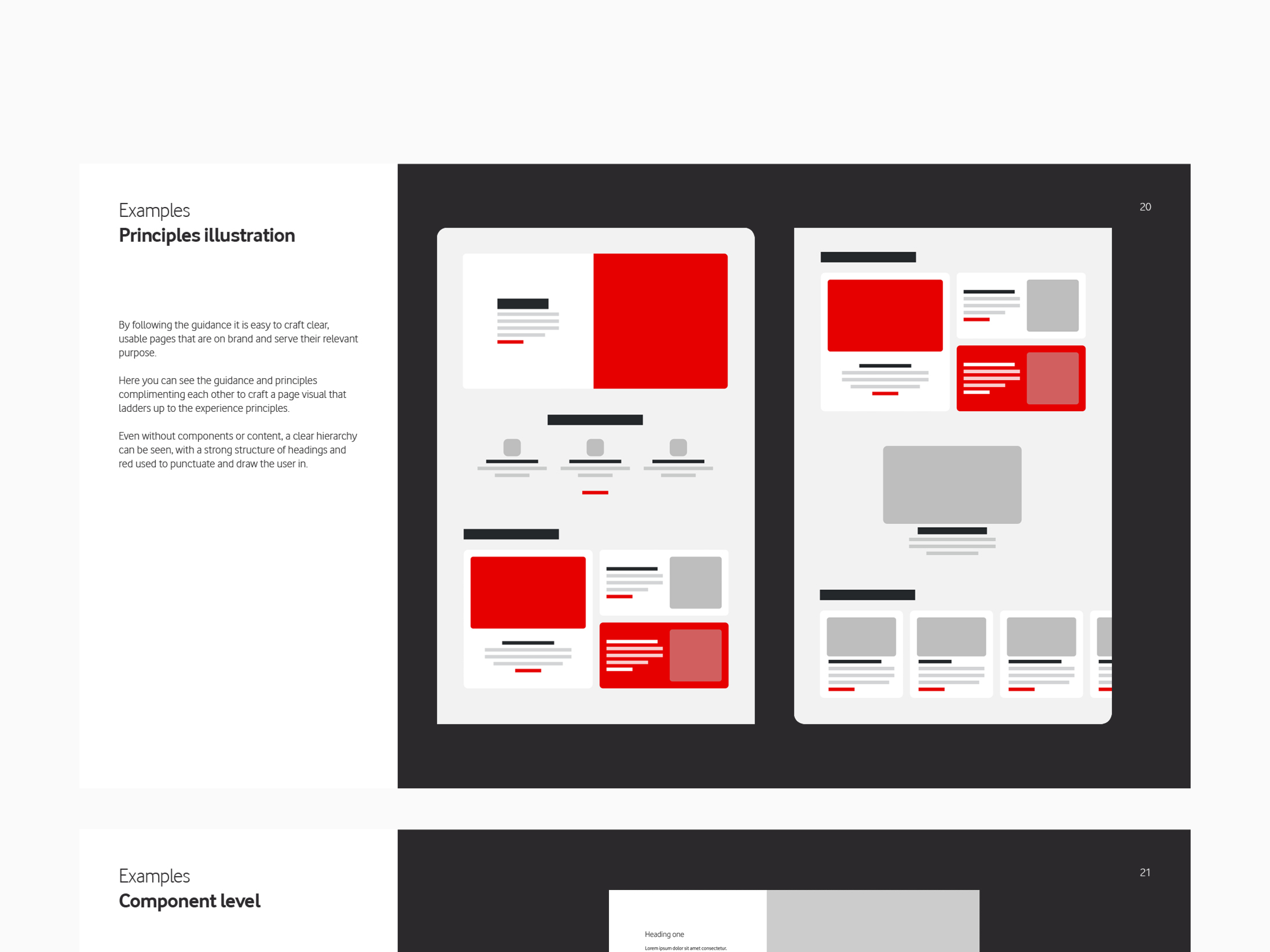
Visual guidance showing the principles in action.
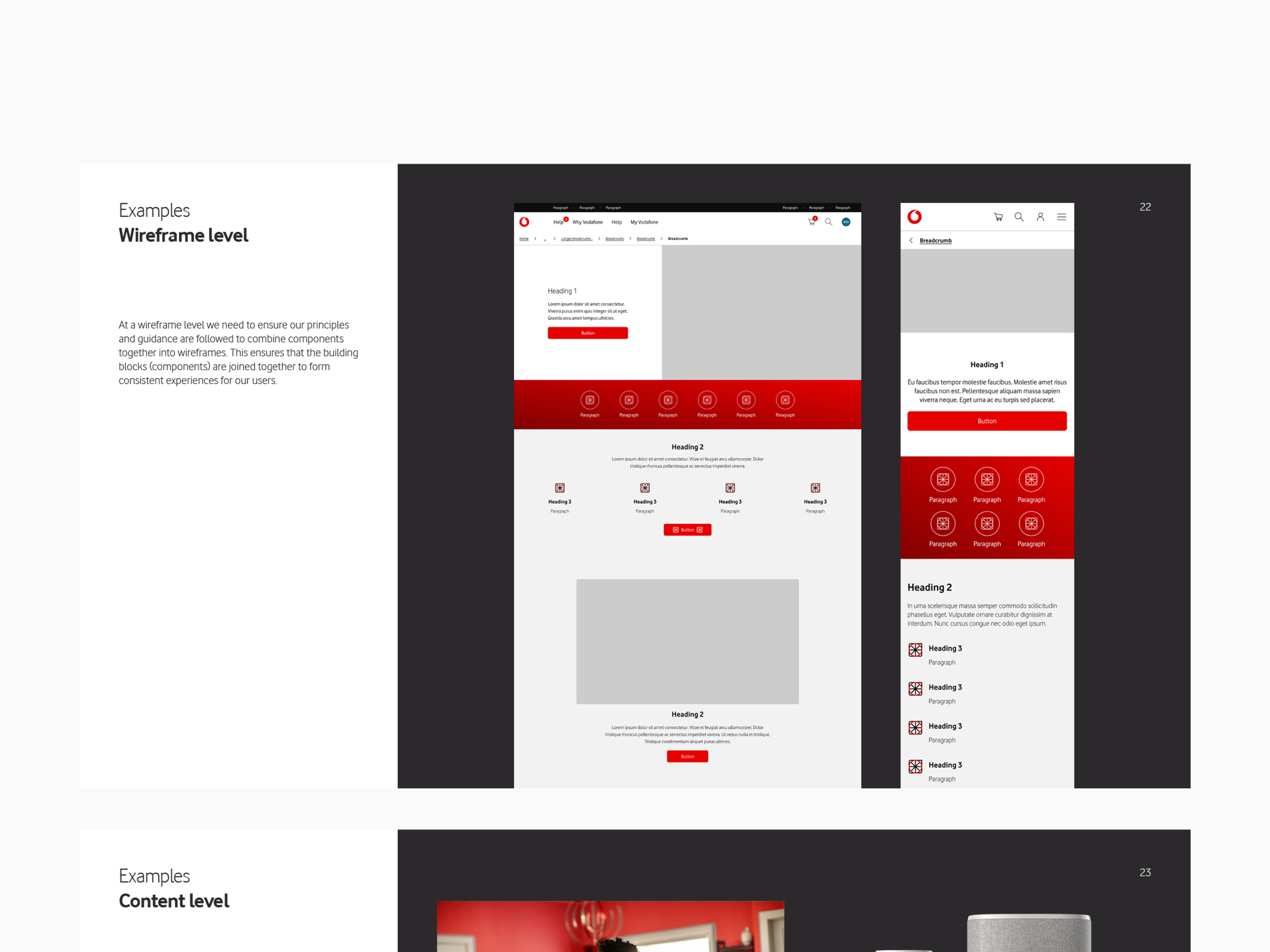
Taking the guidance a step further, illustrating the principles in action with design system components.
Practical reference designs
To make the design language more relatable, annotated reference designs were used to act as examples of “what good looks like” in a real context.
Bringing the principles and guidance together into a reference design.
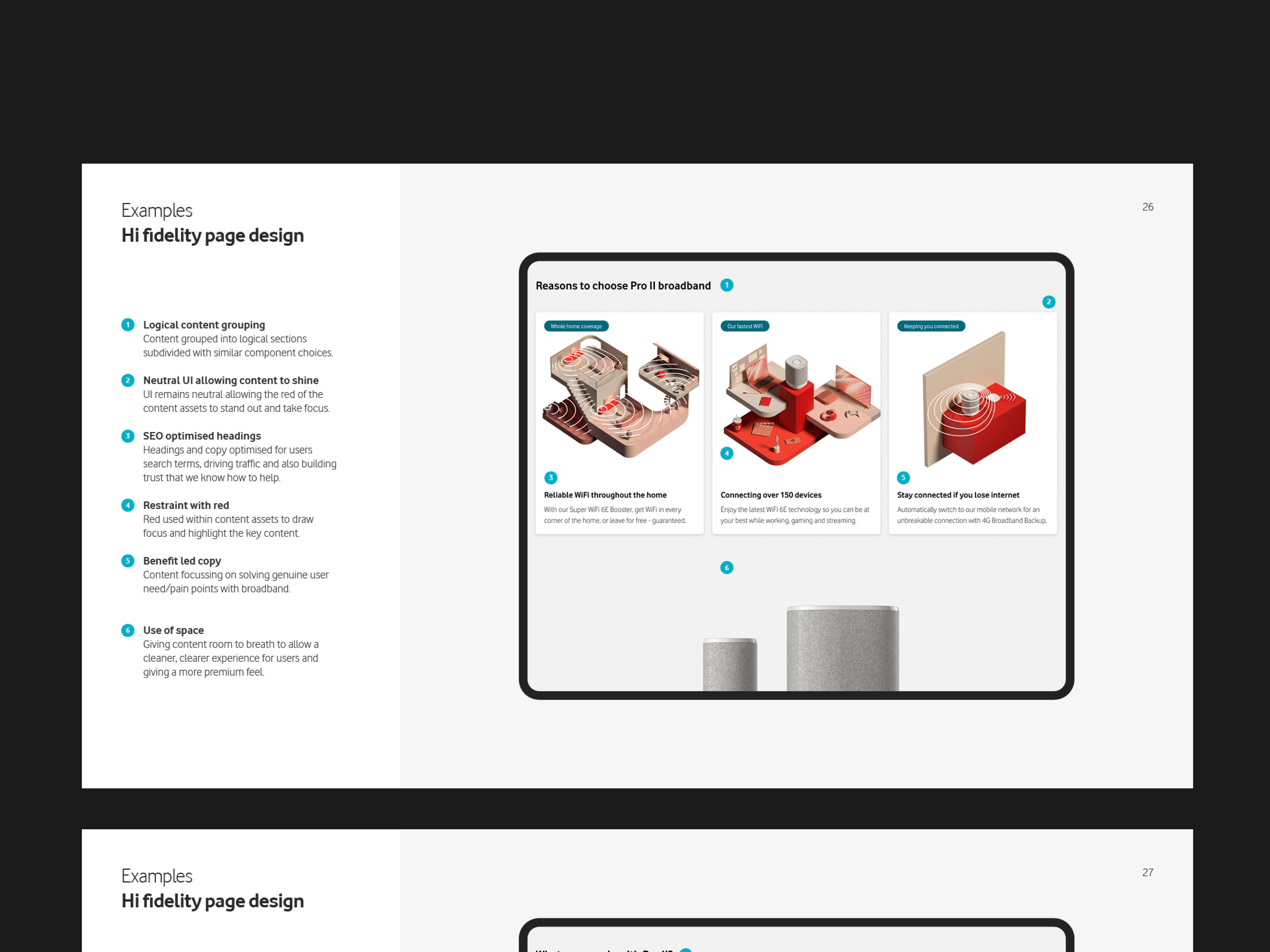
Annotated reference design highlighting principles and explanation.
Validation
The design language helped establish a shared standard across Vodafone’s digital estate.
As a result:
- Design quality became more consistent across journeys
- Teams spent less time reinventing UI patterns
- Collaboration between design and engineering improved
- New designers could onboard faster
The work also fed directly into improvements in key customer journeys, including a broadband redesign that delivered a measurable uplift in conversion.
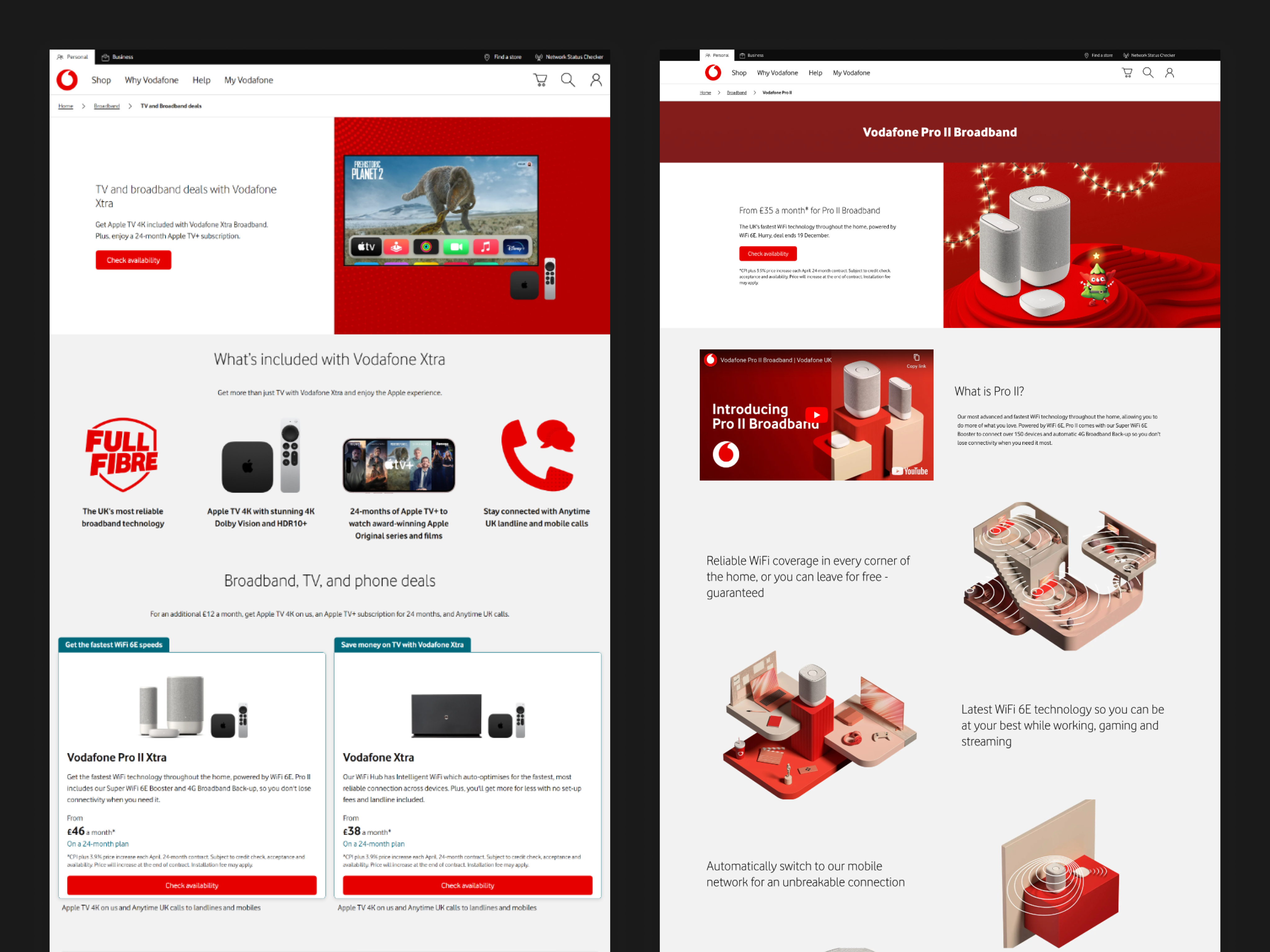
Before: Broadband pages were cramped, inconsistent, and lacked structure and hierarchy.
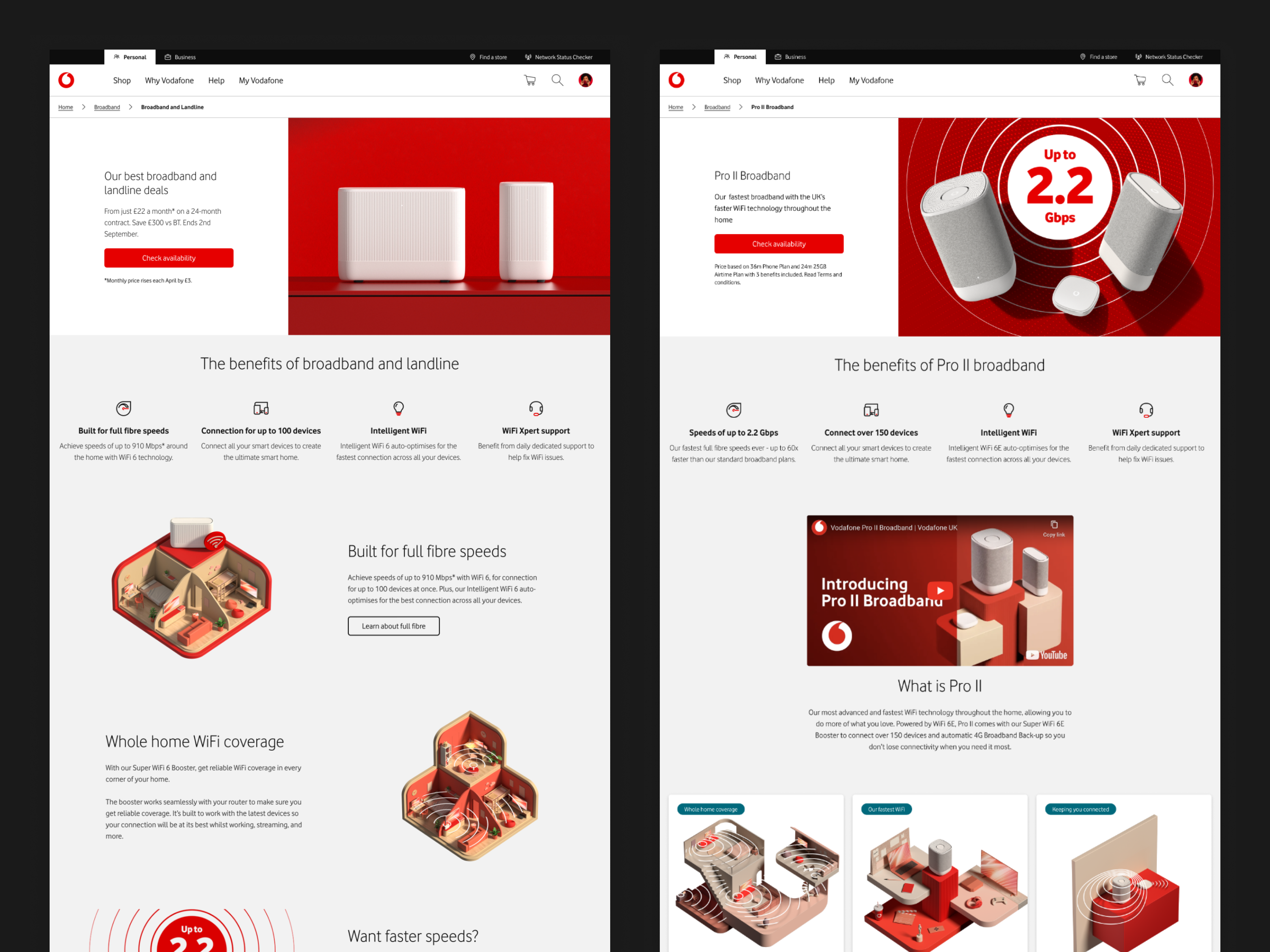
After: Improved consistency, structure, clarity, and hierarchy after following the design language principles and guidance.
Driving Adoption
I worked closely with designers and content teams to integrate the design language into their workflows by:
- hosting introductory sessions
- running design reviews
- providing documentation and templates
- acting as a point of contact for visual quality and consistency
Impact
The design language established a shared design standard across Vodafone’s digital estate by:
- connecting design to business goals
- improving consistency across teams
- increasing confidence in design decisions
- supporting collaboration between teams
- improving customer experience
- creating a foundation for designing at scale
Reflection
This project highlighted how important shared language and principles are in large organisations.
It reinforced that design systems are as much about culture, trust, and communication as they are about components and tokens.
Edd Hopkinson
Senior Designer
© 2025 Edd Hopkinson
Edd Hopkinson
Senior Designer
Solving design alignment at scale
Creating a shared visual language to improve consistency, quality, and scalability across Vodafone’s digital experiences.
Research
Strategy
Direction
Design System
Design
Guidance
Completed @ Vodafone
The Problem
Vodafone UK lacked a cohesive digital design language focused on experience quality and brand expression. The existing design system covered components but gave little guidance on overall structure, layout, typography, and how the brand should feel.
This led teams to take inspiration from other markets or implement the design system in their own ways, resulting in inconsistent user experiences, making it harder for UK users to move between services, and harder for teams to reuse work.
Different teams interpreted the design system differently, creating inconsistent brand and customer experiences.
“We’ve got components but no idea of how to use them all together to make a set of coherant websites ”
M Smith
Design Systems Lead @ Vodafone
My Role
I worked with design leaders from across the business to define Vodafone’s digital design language.
I focussed on:
- understanding the problem
- alignment to business goals
- shaping core design principles
- creating practical guidance for teams
- crafting reference designs
- validating the design language
- driving adoption across teams
This wasn’t about creating a pre-determined way to design. It was about creating a shared way of thinking about design and helping teams make better, more consistent design decisions.
“Working with Edd at Vodafone has been exceptional. His design expertise truly shines in how he masterfully unified our brand elements into a comprehensive digital branding guide. By seamlessly integrating our reference designs, brand guidelines, and design system into one cohesive resource, Edd created an invaluable tool for our team.”
M Smith
Design Systems Lead @ Vodafone
Research & Insight
I undertook an extensive audit of existing documentation to understand where inconsistencies and gaps existed.
The audit revealed:
- no practical links to business objectives
- lack of shared design principles
- lack of digital specific guidelines
- no guidance for design decisions
- reference designs from other markets
- inconsistent brand integration
- misaligned design system use
- knowledge gaps between teams
- duplication of work leading to inconsistency
This highlighted the need for a single source of truth for design decisions.
Layers of brand positioning, strategy, and business goals with no tangible ways for design teams to action them.
Teams looked to the brand guidelines which had poor digital guidance, leading them to fill in the gaps themselves.
The Solution
The design language was structured around a simple progression:
- Business goals
- Design principles
- Practical guidance
- Reference designs
Each layer making the previous actionable.
Aligning design to business goals
I created a framework that mapped digital targets and employee goals to business objectives and brand ambitions, giving the design language a clear strategic purpose.
Connecting design outcomes to Vodafone’s business objectives and brand ambitions.
Creating principles to support those objectives
From this, I introduced broad design principles that showed how design could directly contribute to business goals. For example, UI principles around clear structure, reducing clutter, and usability supported the wider customer experience goal of being straightforward.
Core design principles guide teams in delivering better customer experiences.
Applying the UI principles in a broadband page redesign.
Guidance to help teams apply the principles
I then visualised the principles, creating practical guidance that designers could apply to real project work, giving a consistent foundation for making design decisions and a way to translate principles into action.
Visual guidance showing the principles in action.
Taking the guidance a step further, illustrating the principles in action with design system components.
Practical reference designs
To make the design language more relatable, annotated reference designs were used to act as examples of “what good looks like” in a real context.
Bringing the principles and guidance together into a reference design.
Annotated reference design highlighting principles and explanation.
Validation
The design language helped establish a shared standard across Vodafone’s digital estate.
As a result:
- Design quality became more consistent across journeys
- Teams spent less time reinventing UI patterns
- Collaboration between design and engineering improved
- New designers could onboard faster
The work also fed directly into improvements in key customer journeys, including a broadband redesign that delivered a measurable uplift in conversion.
Before: Broadband pages were cramped, inconsistent, and lacked structure and hierarchy.
After: Improved consistency, structure, clarity, and hierarchy after following the design language principles and guidance.
Driving Adoption
I worked closely with designers and content teams to integrate the design language into their workflows by:
- hosting introductory sessions
- running design reviews
- providing documentation and templates
- acting as a point of contact for visual quality and consistency
Impact
The design language established a shared design standard across Vodafone’s digital estate by:
- connecting design to business goals
- improving consistency across teams
- increasing confidence in design decisions
- supporting collaboration between teams
- improving customer experience
- creating a foundation for designing at scale
Reflection
This project highlighted how important shared language and principles are in large organisations.
It reinforced that design systems are as much about culture, trust, and communication as they are about components and tokens.
Edd Hopkinson
Senior Designer
© 2025 Edd Hopkinson
Edd Hopkinson
Senior Designer
Solving design alignment at scale
Creating a shared visual language to improve consistency, quality, and scalability across Vodafone’s digital experiences.
Research
Strategy
Direction
Design System
Design
Guidance
Completed @ Vodafone
The Problem
Vodafone UK lacked a cohesive digital design language focused on experience quality and brand expression. The existing design system covered components but gave little guidance on overall structure, layout, typography, and how the brand should feel.
This led teams to take inspiration from other markets or implement the design system in their own ways, resulting in inconsistent user experiences, making it harder for UK users to move between services, and harder for teams to reuse work.
Different teams interpreted the design system differently, creating inconsistent brand and customer experiences.
“We’ve got components but no idea of how to use them all together to make a set of coherant websites ”
M Smith
Design Systems Lead @ Vodafone
My Role
I worked with design leaders from across the business to define Vodafone’s digital design language.
I focussed on:
- understanding the problem
- alignment to business goals
- shaping core design principles
- creating practical guidance for teams
- crafting reference designs
- validating the design language
- driving adoption across teams
This wasn’t about creating a pre-determined way to design. It was about creating a shared way of thinking about design and helping teams make better, more consistent design decisions.
“Working with Edd at Vodafone has been exceptional. His design expertise truly shines in how he masterfully unified our brand elements into a comprehensive digital branding guide. By seamlessly integrating our reference designs, brand guidelines, and design system into one cohesive resource, Edd created an invaluable tool for our team.”
M Smith
Design Systems Lead @ Vodafone
Research & Insight
I undertook an extensive audit of existing documentation to understand where inconsistencies and gaps existed.
The audit revealed:
- no practical links to business objectives
- lack of shared design principles
- lack of digital specific guidelines
- no guidance for design decisions
- reference designs from other markets
- inconsistent brand integration
- misaligned design system use
- knowledge gaps between teams
- duplication of work leading to inconsistency
This highlighted the need for a single source of truth for design decisions.
Layers of brand positioning, strategy, and business goals with no tangible ways for design teams to action them.
Teams looked to the brand guidelines which had poor digital guidance, leading them to fill in the gaps themselves.
The Solution
The design language was structured around a simple progression:
- Business goals
- Design principles
- Practical guidance
- Reference designs
Each layer making the previous actionable.
Aligning design to business goals
I created a framework that mapped digital targets and employee goals to business objectives and brand ambitions, giving the design language a clear strategic purpose.
Connecting design outcomes to Vodafone’s business objectives and brand ambitions.
Creating principles to support those objectives
From this, I introduced broad design principles that showed how design could directly contribute to business goals. For example, UI principles around clear structure, reducing clutter, and usability supported the wider customer experience goal of being straightforward.
Core design principles guide teams in delivering better customer experiences.
Applying the UI principles in a broadband page redesign.
Guidance to help teams apply the principles
I then visualised the principles, creating practical guidance that designers could apply to real project work, giving a consistent foundation for making design decisions and a way to translate principles into action.
Visual guidance showing the principles in action.
Taking the guidance a step further, illustrating the principles in action with design system components.
Practical reference designs
To make the design language more relatable, annotated reference designs were used to act as examples of “what good looks like” in a real context.
Bringing the principles and guidance together into a reference design.
Annotated reference design highlighting principles and explanation.
Validation
The design language helped establish a shared standard across Vodafone’s digital estate.
As a result:
- Design quality became more consistent across journeys
- Teams spent less time reinventing UI patterns
- Collaboration between design and engineering improved
- New designers could onboard faster
The work also fed directly into improvements in key customer journeys, including a broadband redesign that delivered a measurable uplift in conversion.
Before: Broadband pages were cramped, inconsistent, and lacked structure and hierarchy.
After: Improved consistency, structure, clarity, and hierarchy after following the design language principles and guidance.
Driving Adoption
I worked closely with designers and content teams to integrate the design language into their workflows by:
- hosting introductory sessions
- running design reviews
- providing documentation and templates
- acting as a point of contact for visual quality and consistency
Impact
The design language established a shared design standard across Vodafone’s digital estate by:
- connecting design to business goals
- improving consistency across teams
- increasing confidence in design decisions
- supporting collaboration between teams
- improving customer experience
- creating a foundation for designing at scale
Reflection
This project highlighted how important shared language and principles are in large organisations.
It reinforced that design systems are as much about culture, trust, and communication as they are about components and tokens.
Edd Hopkinson
Senior Designer
© 2025 Edd Hopkinson
Edd Hopkinson
Senior Designer
Solving design alignment at scale
Creating a shared visual language to improve consistency, quality, and scalability across Vodafone’s digital experiences.
Research
Strategy
Direction
Design System
Design
Guidance
Completed @ Vodafone
The Problem
Vodafone UK lacked a cohesive digital design language focused on experience quality and brand expression. The existing design system covered components but gave little guidance on overall structure, layout, typography, and how the brand should feel.
This led teams to take inspiration from other markets or implement the design system in their own ways, resulting in inconsistent user experiences, making it harder for UK users to move between services, and harder for teams to reuse work.
Different teams interpreted the design system differently, creating inconsistent brand and customer experiences.
“We’ve got components but no idea of how to use them all together to make a set of coherant websites ”
M Smith
Design Systems Lead @ Vodafone
My Role
I worked with design leaders from across the business to define Vodafone’s digital design language.
I focussed on:
- understanding the problem
- alignment to business goals
- shaping core design principles
- creating practical guidance for teams
- crafting reference designs
- validating the design language
- driving adoption across teams
This wasn’t about creating a pre-determined way to design. It was about creating a shared way of thinking about design and helping teams make better, more consistent design decisions.
“Working with Edd at Vodafone has been exceptional. His design expertise truly shines in how he masterfully unified our brand elements into a comprehensive digital branding guide. By seamlessly integrating our reference designs, brand guidelines, and design system into one cohesive resource, Edd created an invaluable tool for our team.”
M Smith
Design Systems Lead @ Vodafone
Research & Insight
I undertook an extensive audit of existing documentation to understand where inconsistencies and gaps existed.
The audit revealed:
- no practical links to business objectives
- lack of shared design principles
- lack of digital specific guidelines
- no guidance for design decisions
- reference designs from other markets
- inconsistent brand integration
- misaligned design system use
- knowledge gaps between teams
- duplication of work leading to inconsistency
This highlighted the need for a single source of truth for design decisions.
Layers of brand positioning, strategy, and business goals with no tangible ways for design teams to action them.
Teams looked to the brand guidelines which had poor digital guidance, leading them to fill in the gaps themselves.
The Solution
The design language was structured around a simple progression:
- Business goals
- Design principles
- Practical guidance
- Reference designs
Each layer making the previous actionable.
Aligning design to business goals
I created a framework that mapped digital targets and employee goals to business objectives and brand ambitions, giving the design language a clear strategic purpose.
Connecting design outcomes to Vodafone’s business objectives and brand ambitions.
Creating principles to support those objectives
From this, I introduced broad design principles that showed how design could directly contribute to business goals. For example, UI principles around clear structure, reducing clutter, and usability supported the wider customer experience goal of being straightforward.
Core design principles guide teams in delivering better customer experiences.
Applying the UI principles in a broadband page redesign.
Guidance to help teams apply the principles
I then visualised the principles, creating practical guidance that designers could apply to real project work, giving a consistent foundation for making design decisions and a way to translate principles into action.
Visual guidance showing the principles in action.
Taking the guidance a step further, illustrating the principles in action with design system components.
Practical reference designs
To make the design language more relatable, annotated reference designs were used to act as examples of “what good looks like” in a real context.
Bringing the principles and guidance together into a reference design.
Annotated reference design highlighting principles and explanation.
Validation
The design language helped establish a shared standard across Vodafone’s digital estate.
As a result:
- Design quality became more consistent across journeys
- Teams spent less time reinventing UI patterns
- Collaboration between design and engineering improved
- New designers could onboard faster
The work also fed directly into improvements in key customer journeys, including a broadband redesign that delivered a measurable uplift in conversion.
Before: Broadband pages were cramped, inconsistent, and lacked structure and hierarchy.
After: Improved consistency, structure, clarity, and hierarchy after following the design language principles and guidance.
Driving Adoption
I worked closely with designers and content teams to integrate the design language into their workflows by:
- hosting introductory sessions
- running design reviews
- providing documentation and templates
- acting as a point of contact for visual quality and consistency
Impact
The design language established a shared design standard across Vodafone’s digital estate by:
- connecting design to business goals
- improving consistency across teams
- increasing confidence in design decisions
- supporting collaboration between teams
- improving customer experience
- creating a foundation for designing at scale
Reflection
This project highlighted how important shared language and principles are in large organisations.
It reinforced that design systems are as much about culture, trust, and communication as they are about components and tokens.
Edd Hopkinson
Senior Designer
© 2025 Edd Hopkinson
Edd Hopkinson
Senior Designer
Solving design alignment at scale
Creating a shared visual language to improve consistency, quality, and scalability across Vodafone’s digital experiences.
Research
Strategy
Direction
Design System
Design
Guidance
Completed @ Vodafone
The Problem
Vodafone UK lacked a cohesive digital design language focused on experience quality and brand expression. The existing design system covered components but gave little guidance on overall structure, layout, typography, and how the brand should feel.
This led teams to take inspiration from other markets or implement the design system in their own ways, resulting in inconsistent user experiences, making it harder for UK users to move between services, and harder for teams to reuse work.
Different teams interpreted the design system differently, creating inconsistent brand and customer experiences.
“We’ve got components but no idea of how to use them all together to make a set of coherent websites. ”
M Smith
Design Systems Lead @ Vodafone
My Role
I worked with design leaders from across the business to define a foundational digital design language.
I focussed on:
- auditing current guidance and documentation
- shaping core design principles
- creating practical guidance for teams
- crafting reference designs
- validating the design language
- driving adoption across teams
- aligning outcomes to business goals
This wasn’t about creating a pre-determined way to design. It was about creating a shared way of thinking about design and helping teams make better, more consistent design decisions.
“Working with Edd at Vodafone has been exceptional. His design expertise truly shines in how he masterfully unified our brand elements into a comprehensive digital branding guide. By seamlessly integrating our reference designs, brand guidelines, and design system into one cohesive resource, Edd created an invaluable tool for our team.”
M Smith
Design Systems Lead @ Vodafone
Research & Insight
I undertook an extensive audit of existing documentation to understand where inconsistencies and gaps existed.
The audit revealed:
- no practical links to business objectives
- lack of shared design principles
- lack of digital specific guidelines
- no guidance for design decisions
- reference designs from other markets
- inconsistent brand integration
- misaligned design system use
- knowledge gaps between teams
- duplication of work leading to inconsistency
This highlighted the need for a single source of truth for design decisions.
Layers of brand positioning, strategy, and business goals with no tangible ways for design teams to action them.
Teams looked to the brand guidelines which had poor digital guidance, leading them to fill in the gaps themselves.
The Solution
The design language was structured around a simple progression:
- Business goals
- Design principles
- Practical guidance
- Reference designs
Each layer making the previous actionable.
Aligning design to business goals
I created a framework that mapped digital targets and employee goals to business objectives and brand ambitions, giving the design language a clear strategic purpose.
Connecting design outcomes to Vodafone’s business objectives and brand ambitions.
Creating principles to support those objectives
From this, I introduced broad design principles that showed how design could directly contribute to business goals. For example, UI principles around clear structure, reducing clutter, and usability supported the wider customer experience goal of being straightforward.
Core design principles guide teams in delivering better customer experiences.
Applying the UI principles in a broadband page redesign.
Guidance to help teams apply the principles
I then visualised the principles, creating practical guidance that designers could apply to real project work, giving a consistent foundation for making design decisions and a way to translate principles into action.
Visual guidance showing the principles in action.
Taking the guidance a step further, illustrating the principles in action with design system components.
Practical reference designs
To make the design language more relatable, annotated reference designs were used to act as examples of “what good looks like” in a real context.
Bringing the principles and guidance together into a reference design.
Annotated reference design highlighting principles and explanation.
Validation
The design language was validated with a real project, the redesign of Vodafone’s broadband journey.
This allowed the design language to be:
- validated in a live environment
- refined based on real constraints
- proven as a practical tool
- tested with wider product teams
The impacts of the design language on this project:
- Reduced friction and improved clarity for users.
- Consistent design system alignment.
- A +10.9% uplift in basket progression.
- Highlighted the value of the design language and it’s direct impact on product performance.
Before: Broadband pages were cramped, inconsistent, and lacked structure and hierarchy.
After: Improved consistency, structure, clarity, and hierarchy after following the design language principles and guidance.
Driving Adoption
I worked closely with designers and content teams to integrate the design language into their workflows by:
- hosting introductory sessions
- running design reviews
- providing documentation and templates
- acting as a point of contact for visual quality and consistency
Impact
The design language established a shared design standard across Vodafone’s digital estate by:
- connecting design to business goals
- improving consistency across teams
- increasing confidence in design decisions
- supporting collaboration between teams
- improving customer experience
- creating a foundation for designing at scale
Reflection
This project highlighted how important shared language and principles are in large organisations.
It reinforced that design systems are as much about culture, trust, and communication as they are about components and tokens.
Edd Hopkinson
Senior Designer
© 2025 Edd Hopkinson